

AI in Commercial Real Estate

July 30, 2026
AI in Commercial Real Estate
July 30, 2026

According to the 2026 ULI/PwC Emerging Trends in Real Estate report, U.S. commercial real estate is "navigating the fog" — a market where one-third of surveyed industry leaders expect conditions to improve, one-third expect them to worsen, and the remainder see no change. That three-way split is not noise. It is the defining feature of the 2026 cycle: capital is abundant, conviction is scarce, and the gap between operators with real-time data and operators still running portfolios out of static spreadsheets is widening every quarter. As one ULI panelist summarized: "It's very hard to figure out what's the signal and what's the noise."
This analysis draws on Smart Capital Center — a CRE intelligence platform analyzing $500B+ in transactions across 120M+ properties, used by KeyBank, JLL, and The RMR Group — to translate the ULI 2026 themes into specific actions institutional investors and lenders can take right now.
The 2026 ULI/PwC report frames the year ahead with one phrase: fog. In practical terms, it means three measurable conditions are converging at once.
1. Sentiment is fragmented. ULI's 2026 survey shows roughly even thirds of respondents expecting improvement, deterioration, or stasis in capital markets — the widest sentiment dispersion since the post-2008 cycle.
2. Transaction velocity is bifurcated. Bidding for top-tier assets is producing 8–10% price premiums, while secondary assets are seeing extended marketing periods and re-trades on price.
3. Data infrastructure is the differentiator. The industry no longer competes on access to information — virtually every firm has CoStar, ARGUS, and a Bloomberg terminal. The competition is on speed of synthesis: how fast a team can move from raw data to a defensible underwriting decision.
For investors, lenders, and asset managers, "navigating the fog" is shorthand for one operational truth: 2026 will reward firms that compress their decision cycles and punish firms that do not.
Artificial intelligence (AI) no longer sits at the periphery of CRE conversations; it now shapes core business models. The ULI 2026 report names "AI Moves into Real Estate" as a defining theme, reflecting a leap from speculative potential to operational necessity.
As one ULI executive panelist noted: "The question today isn't how much data do we have — it's how do we convert it into actionable strategy. AI is the only tool powerful enough to keep pace with the market's complexity."
AI has become operationally embedded in three core CRE functions:
What once took weeks now takes hours. AI-driven document recognition and risk-flagging compress the diligence cycle without sacrificing rigor. Ken Schroeder of KeyBank reported a 40% reduction in financial model preparation time after implementing automated underwriting workflows — a process that previously consumed three analysts for a full day now requires one analyst for two hours, with full audit-ready traceability for loan committee.
AI parses macroeconomic signals, micro-market absorption data, and tenant-level performance simultaneously — surfacing patterns invisible to manual analysis. The challenge in 2026 is not lack of data; it is discerning what matters most.
Sensor-enabled buildings combined with AI-powered facility management platforms now predict equipment failures before they disrupt operations. This preserves NOI, reduces tenant churn, and protects asset value at exit.
Sarah Queen of Mountain Lights, quoted in the ULI panel, articulated the shift: "We use AI as a peer for idea validation. Our goal isn't to replace judgment but to sharpen it using every relevant data stream."

The ULI 2026 report’s capital markets section is titled “Half Full or Half Empty?” a reflection of the uncertainty gripping the space. Sentiment is sharply divided: a third of survey respondents believe conditions will improve, a third predict worsening, and the remainder see no change. This fragmentation in outlook underscores the importance of staying nimble and well-informed.
Panelists noted the paradox at play: “There’s a 20-year high appetite to buy, but a historic caution underpinning every transaction.” Opportunities exist in abundance, but the pathway is narrow and straight-line thinking no longer works.
Key capital markets trends for 2026 include:
“In this market, conviction is more valuable than ever,” said one senior analyst. “But conviction must be grounded in real-time data, not wishful thinking.”
There is an “arms race” for information, but also for the speed to interpret and deploy it. Tools that enable dynamic scenario planning and instant asset comparison are no longer nice-to-haves, they are survival gear for dealmakers.

Emerging asset classes have shifted from the "niche" column to essential pillars of the modern CRE portfolio. The ULI 2026 report draws a clear distinction: the leaders of 2026 and beyond will be those who understand these markets at a granular level and underwrite them with conviction.
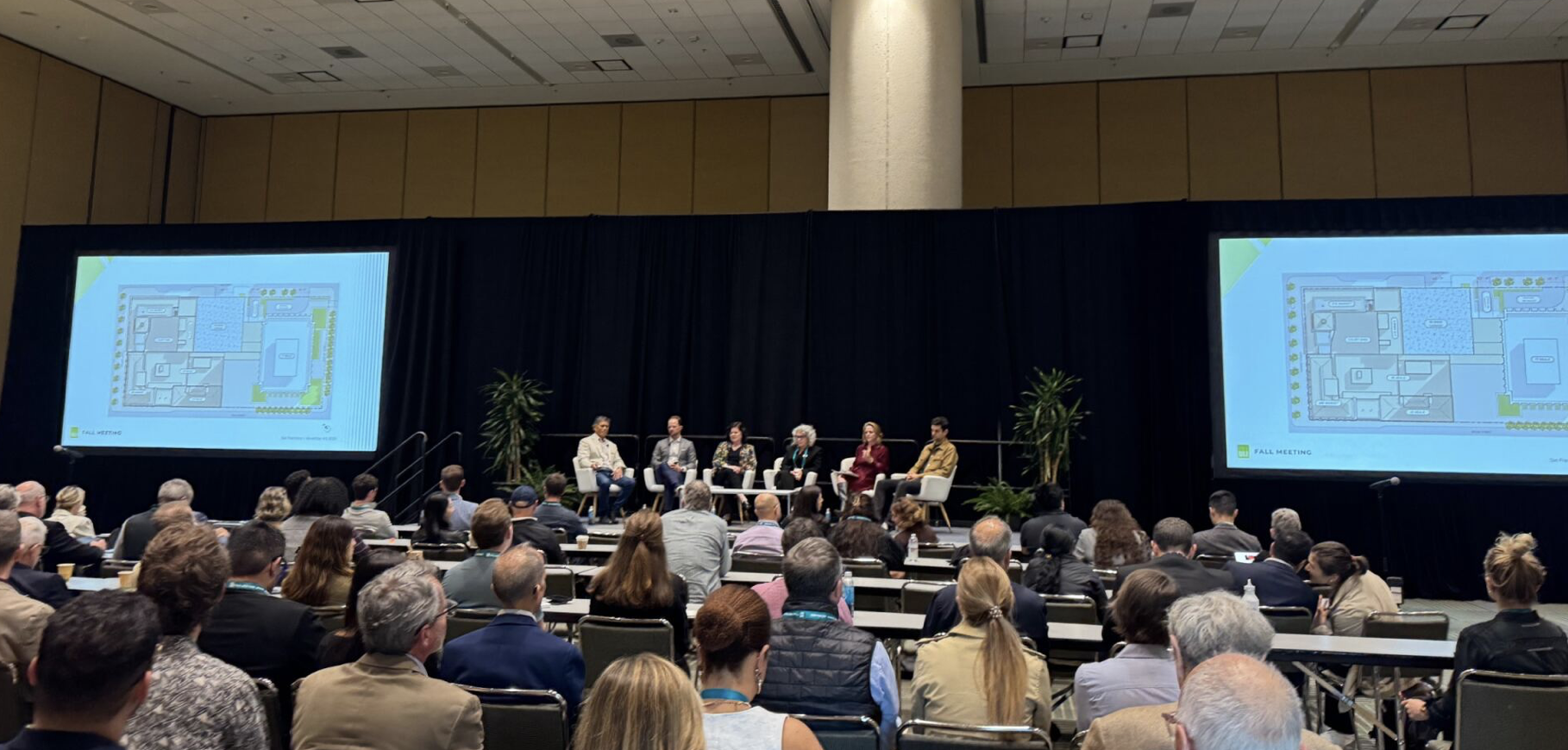
Data centers, once esoteric, now sit at the heart of digital infrastructure. AI compute demand, cloud migration, and IoT adoption have driven national data center vacancy below 2%, per the ULI 2026 report. As one panelist noted: "AI's growth is everything to the data center asset class. But the checks are getting bigger; the risk is outsized if you don't understand the power and environmental variables."
Success in this asset class requires next-generation diligence: modeling energy regulation risk, grid resilience, and political sentiment alongside tenant credit. Many developers are now partnering directly with utilities and municipalities to future-proof projects against shifting sustainability standards.
By 2026, the first baby boomers turn 80, and roughly 11,000 Americans reach age 65 every day (U.S. Census Bureau projections). This demographic wave is both a supply challenge and an innovation opportunity.
Chris Porter, in the ULI 2026 panel, framed it: the demand spans "active adult communities to tech-enabled assisted living and memory care." Operators who layer AI-driven wellness programming and remote health monitoring on top of strong real estate fundamentals achieve higher occupancy, longer tenure, and better outcomes for both investors and residents.
The dichotomy in this asset class is geographic. In some markets, oversupply and persistent labor shortages threaten margins. In others, rapidly aging populations are producing structural undersupply and premium pricing power. Hyper-local analytics — not national averages — separate winners from losers.
Build-to-rent and traditional multifamily continue to perform as core CRE strategies, especially given persistent housing unaffordability. Sarah Queen forecast on the ULI panel: "Multifamily assets acquired below today's replacement cost will deliver outperformance for years." The ULI 2026 report — and aligned JLL multifamily research — confirms apartment construction starts have declined sharply, even as demand holds steady.
Data-enabled owner-operators in 2026 are using:
The common thread: success in any of these sectors requires fusing traditional asset data with external signals — population migration, job growth, and technology adoption rates.
For years, Sun Belt city growth has crowded out legacy “gateway” metros in industry narratives. But the ULI 2026 report shows a significant shift, with four Northeast markets; Jersey City, Brooklyn, Manhattan, and Northern New Jersey, rocketing into the top-10 list for investor interest.
Sarah Queen, reflecting on the data, observed, “Count New York out at your peril. When capital and talent migrate back, vibrancy returns across office, retail, and multifamily.”
Key drivers include:
Chris Porter cautioned: "Not every urban district is rebounding. Deep local insight and property-level data are required to distinguish signal from noise."
If capital and technology create the near-term advantage, demographics explain long-term demand. The ULI 2026 panel placed special focus on three structural shifts:
The takeaway for 2026: cross-referencing live demographic models with real asset data is now the baseline for resilient, forward-looking strategy.
A consistent narrative in the 2026 report is the renewed emphasis on fundamental operational rigor, reimagined through new technologies. “Back to Basics with New Tools” means that while location, execution, and capital discipline remain critical, the “how” is being revolutionized.
Industry voices agree:
“Every basis point of NOI counts—data lets us find and act on them faster,” noted a leading asset manager quoted in the ULI report.
The ULI 2026 framework reduces to a five-step diligence sequence that institutional investors and lenders can apply on every deal in the current market.
Smart Capital Center automates all five steps in a single dashboard, pulling from 1B+ live data points — reducing this diligence cycle from two days to under three hours.
Platforms like Smart Capital Center (SCC) have become vital enablers of the data-driven 2026 playbook. SCC's stack is purpose-built to harness the proliferation of real estate and financial data, automating risk scoring, benchmarking, and opportunity analysis for CRE professionals at every scale.
Fernando Salazar at JLL reported a 30x productivity gain on portfolio-level analysis after deployment. Ken Schroeder at KeyBank reported a 40% reduction in financial model prep time for the loan committee process.
In a market defined by fog, those numbers are not marketing — they are the operational difference between the firms compounding ahead and the firms repricing every quarter.
The 2026 ULI/PwC Emerging Trends report identifies four defining themes: AI moving into core CRE workflows, capital-markets sentiment splitting roughly into thirds (improve / worsen / flat), the resurgence of gateway markets including New York and New Jersey, and the rise of new essential asset classes like data centers and senior housing. The common thread across all four is that 2026 rewards data velocity — firms that can underwrite faster than their competition will outperform.
AI is now operationally embedded in three CRE functions: automated document review and risk-flagging during diligence, real-time market and portfolio analysis, and predictive maintenance for operating assets. Institutional firms using these workflows report measurable outcomes — including a 40% reduction in financial model preparation time at KeyBank and a 30x productivity gain on portfolio analysis at JLL. The 2026 question is no longer whether AI works in CRE; it is how quickly a firm can embed it.
Yes. The ULI 2026 report shows four Northeast markets — Jersey City, Brooklyn, Manhattan, and Northern New Jersey — among the top-10 markets for investor interest. The drivers are office attendance approaching 80% of pre-pandemic levels in primary metros, sustained global capital rotation toward U.S. gateway markets, and a renaissance in urban amenities, transit-oriented development, and luxury retail.
AI compute, cloud migration, and IoT adoption have pushed national data center vacancy below 2% per the ULI 2026 report. Demand has outpaced both supply and development capacity — but the asset class now requires diligence on power availability, grid resilience, and local environmental regulation, not just lease terms. Many developers are partnering directly with utilities and municipalities to secure power and pre-empt regulatory risk.
"Navigating the fog" is the framing the 2026 ULI/PwC Emerging Trends report uses to describe a market with high capital availability, high cautiousness, and very low forward visibility. Industry sentiment is split roughly into thirds between those expecting improvement, deterioration, or no change. In practical terms, it means 2026 will reward firms that compress their decision cycles using real-time data and punish firms that do not.
Senior housing should be underwritten hyper-locally, not nationally. The U.S. is seeing roughly 11,000 people reach age 65 every day, creating structural undersupply in some markets — but oversupply and labor shortages are pressuring margins in others. Operators who combine AI-driven wellness programming, remote health monitoring, and tech-enabled assisted living formats are seeing higher occupancy and longer tenure. The asset class rewards data depth, not market generalizations.
The defining insight of the 2026 ULI/PwC Emerging Trends in Real Estate report is this: the CRE market is not bad — it is opaque, and opacity rewards firms with the fastest, most defensible data infrastructure.
The fog is real. AI is no longer optional. Gateway markets are returning. Data centers, senior housing, and multifamily are repricing in real time. The only competitive advantage left in 2026 belongs to teams that can convert raw market data into a defensible underwriting decision faster than their competitors. Smart Capital Center gives institutional investors and lenders the same 1B+ live data points the largest firms in the industry already use — without the institutional headcount.
Underwrite your 2026 deals with the same intelligence used by KeyBank, JLL, and The RMR Group. Book a demo today.