

Smart Capital News

July 30, 2026
Smart Capital News
July 30, 2026
According to Deloitte’s 2025 Commercial Real Estate Outlook, 76% of CRE firms are still researching, piloting, or in early-stage AI implementation — and 81% identify data and technology as their top spending priority. In multifamily specifically, the gap between experiment and enterprise adoption is now where competitive advantage is being won. McKinsey estimates generative AI alone could unlock $110–$180 billion in value across the global real estate industry; its 2025 follow-up puts the agentic AI value pool at $430–$550 billion annually.
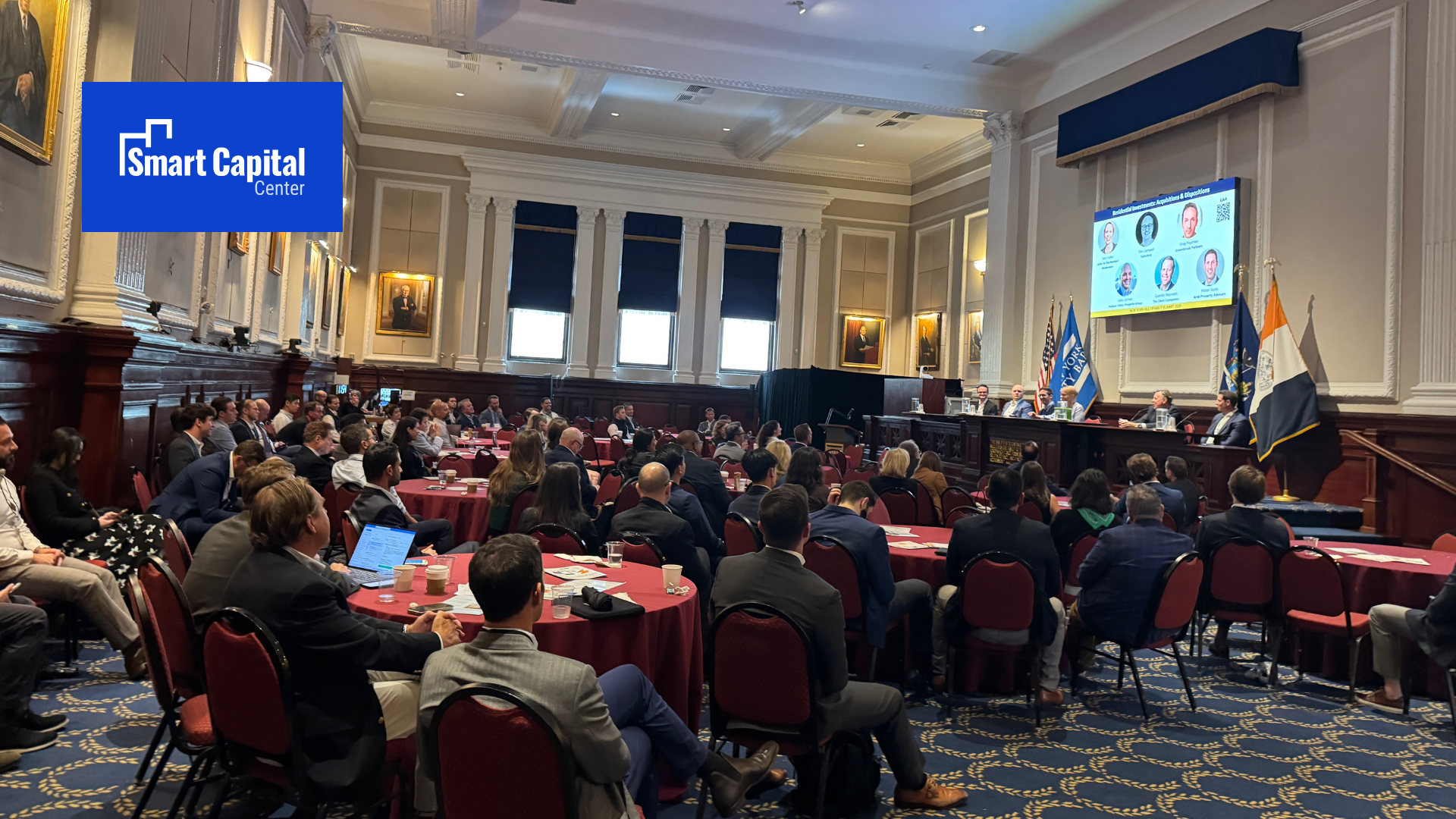
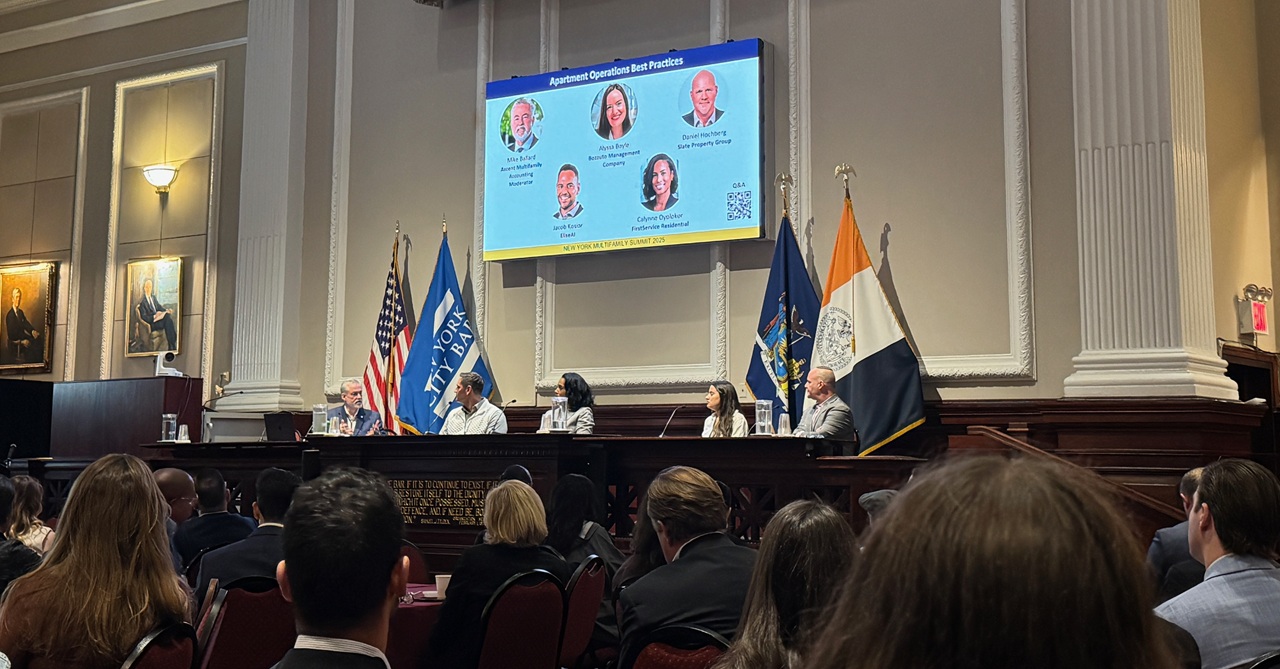
At the GreenPearl NYC Multifamily Summit, industry leaders explored the capital markets outlook, development challenges, operational efficiencies, and — most critically — the role of AI across the multifamily investment lifecycle. Smart Capital Center — the AI-powered CRE intelligence platform with $500B+ in analyzed transactions, 120M+ properties in its database, 1B+ real-time data points, and institutional clients including KeyBank, JLL, RMR Group, Tremont Realty Capital, Aareal Bank, and Community Preservation Corporation — was on hand to anchor the AI conversation. The message from the room was unambiguous: the future of multifamily will be shaped by firms that deploy AI-powered smart capital strategies across underwriting, asset management, and portfolio surveillance.
This article is written for institutional CRE investors, private equity sponsors, debt funds, multifamily operators, and capital providers looking for practical, deployable applications of AI in multifamily — grounded in the conversations and data that surfaced at the Summit.
One of the opening themes of the Summit was the strength of multifamily fundamentals, even amid uncertainty. As one panelist emphasized:
“NYC multifamily fundamentals remain exceptionally strong despite broader economic uncertainty, with historically low vacancy rates and near-zero availability driving sustained rent growth.” — Panelist, GreenPearl NYC Multifamily Summit
Conference data reinforced the point: MAG Partners reported rents performing $3 per square foot above pro forma at newly opened projects, and Gowanus properties achieving above $90 per square foot despite earlier underwriting skepticism. The same dynamic is showing up in the broader market — NYC is now the country’s largest office-to-residential conversion market precisely because multifamily demand and rent growth justify the redevelopment economics.
At the same time, financing dynamics are bifurcated. Debt capital is widely available — even for complex remediation projects — while equity capital remains constrained. Per Deloitte’s 2025 outlook, 88% of global CRE leaders expect their company’s revenues to increase in 2025, but capital deployment remains slower than the underlying fundamentals would suggest, in part because reporting and underwriting infrastructure has not kept pace.
“Debt financing is more competitive and liquid than we’ve seen in years, as lenders attempt to fill the gap left by sidelined equity capital.” — Panelist, GreenPearl NYC Multifamily Summit
For capital providers, this creates a structural tension: deals must be underwritten with both speed and accuracy to capture opportunities without exposing the firm to downside risk.
How Smart Capital Center fits: AI-powered underwriting automates the financial structuring process — from due-diligence document ingestion to underwriting models and credit memos. Work that previously took 30–40 minutes per financial statement now takes 1–3 minutes, per Fernando Salazar, JLL. KeyBank reports a 40% reduction in financial model prep time on its CRE lending workflow. In volatile markets where speed and precision are both required, the dual advantage keeps capital deployable.
The political environment also loomed over investor conversations, with the upcoming NYC mayoral election cycle a recurring theme. Most panelists agreed the perceived risk far outweighed the likely actual policy impact:
“Perceived risk from the upcoming mayoral election is exceeding actual policy impact, with investors using political uncertainty as an additional reason to remain sidelined.” — Panelist, GreenPearl NYC Multifamily Summit
Regardless of politics, supply constraints remain the bigger story. CRE developers with active pipelines are positioned to benefit, particularly in New York City — where vacancy remains at multi-year lows and the Office of the NYC Comptrollerestimates the first wave of office-to-residential conversions could yield over 17,000 new housing units against a 730 million-square-foot office market, 82% of which sits in Manhattan.
How Smart Capital Center fits: By monitoring shifting assumptions and market fundamentals across 1B+ real-time data points, the platform equips CRE investors to model risks around both policy and supply in real time. Instead of waiting for certainty, teams make decisions backed by live data and Deep Research — with every projection linked back to its source for committee defensibility.
Conversations around development economics revealed both obstacles and opportunities. Construction costs continue to send mixed signals: material and labor remain elevated, while contractor margins are compressing as the new-development pipeline thins.
Against that backdrop, office-to-residential conversions emerged as a clear bright spot. Panelists pointed out that conversions can often be completed in 16 months versus 36 months for ground-up development. The market data supports the framing. Per Cushman & Wakefield reporting cited at the Summit and in subsequent industry coverage, NYC office-to-residential conversion activity has scaled from 1.6 million square feet in 2023 to 3.3 million square feet in 2024, with 4.1 million square feet underway through August 2025 — and an additional 8.8 million square feet in the pipeline. The largest single project, 5 Times Square, will create up to 1,250 housing units (including 313 permanently affordable homes) from a building with a 77% pre-conversion office vacancy rate.
This compressed timeline matters in the current rate environment. With the right building stock — small floor plates, high ceilings, multiple exposures — conversions deliver materially lower costs per residential unit than new construction, and the 467-m tax incentive enacted in 2024 extends up to 35 years of property tax relief for projects that include affordable housing.
Evaluating these opportunities requires rapid, scenario-based analysis. Our AI-powered underwriting and modeling tools allow developers and capital providers to compare the feasibility of ground-up projects against conversions in minutes, not weeks. By automatically structuring inputs like tax abatements, cap rates, and construction timelines into pro formas, Smart Capital equips decision-makers to validate whether a conversion pencils—and to do so with precision at deal speed.
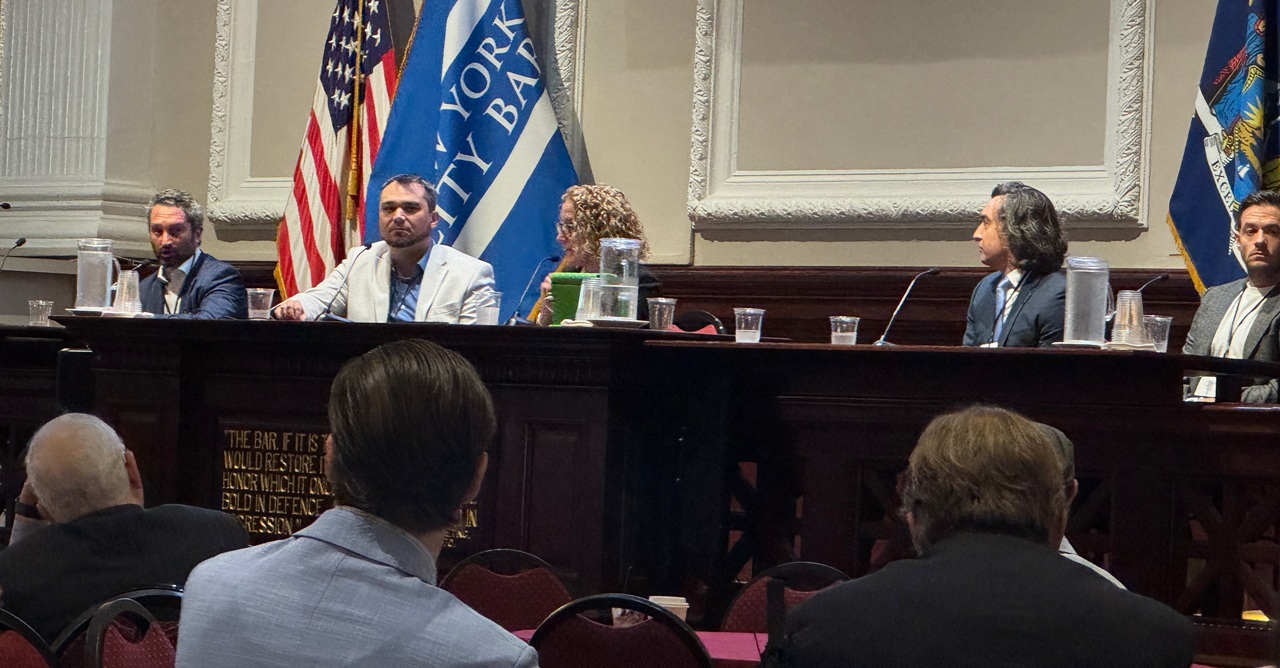
Some of the most forward-looking panels focused on how AI is transforming multifamily operations. The conversation surfaced data points that align with broader industry research. Per Snappt’s 2024 Fraud Report, which analyzed nearly 5 million rental application documents, 6.4% of multifamily rental applications in 2024 contained fraudulent or manipulated information — with over 80,000 forged documents in a single year and $156.7 million in bad-debt avoidance through detection. A 2024 National Multifamily Housing Council survey separately found that 93.3% of multifamily operators reported experiencing applicant fraud in the prior 12 months.
Three operational shifts surfaced at the Summit:
• AI is managing 10+ million leasing leads annually, with 41% of inquiries occurring during closed office hours — plugging coverage gaps that historically cost operators conversions.
• Automated lease file auditing has compressed quarterly manual review cycles into a button-click task, freeing audit staff to handle exceptions and high-risk cases.
• Fraud-detection tools flagged 23% of initially approved applicants as unqualified at properties using AI document review, with some NYC submarkets reporting 40–50% applicant fraud rates — well above the 6.4% national Snappt average.
“Agentic AI follows customized workflows rather than reactive responses, enabling proactive lead management, rent collection, maintenance coordination, and renewal conversations.” — Panelist, GreenPearl NYC Multifamily Summit
How Smart Capital Center fits: While many firms adopt AI as scattered point solutions, Smart Capital Center integrates AI across the full investment lifecycle. The platform doesn’t just surface insights — it operationalizes them, with always-on AI agents underwriting, auditing leases, analyzing rent rolls, detecting tenant credit risk, monitoring compliance, and surfacing proactive alerts around the clock. Per McKinsey’s 2025 framework for agentic AI in real estate, the most successful deployments separate “steps” (repeatable tasks suited to AI execution) from “thoughts” (judgment calls that preserve human discretion) — exactly the operating model the platform embodies.
That distinction is what separates isolated pilots from enterprise-scale transformation. The same technology reshaping leasing, auditing, and fraud detection in pockets of the industry can be deployed across origination, underwriting, portfolio monitoring, and servicing — giving CRE investment teams an always-on, fully scaled digital workforce that underwrites faster, audits more accurately, and protects against risk at portfolio scale.
While much of the Multifamily Summit featured prepared remarks, some of the most revealing insights came from the audience Q&A. The questions underscored both curiosity and urgency around how AI can be practically applied across the CRE investment lifecycle.
A panelist responded: “Speed without accuracy is dangerous, but accuracy without speed leaves opportunities on the table. AI can cut analysis time from weeks to days, especially when it has human oversight.
Smart Capital Center delivers AI-powered underwriting that combines speed with accuracy. By linking every data point back to its source document, the platform makes underwriting transparent, verifiable, and defensible—while reducing processing time by up to 30x compared to manual methods.
The response emphasized data standardization: AI only delivers at scale when firms treat it as a new team member embedded in workflows, not a siloed tool. Standardizing rent rolls, financials, and servicing data is the foundation for real adoption.
Our platform standardizes financials, rent rolls, appraisals, and servicing data automatically, giving firms a foundation for enterprise-scale AI adoption. This allows investment teams to embed AI directly into their workflows rather than relying on fragmented tools.
Panelists pointed to ROI: fraud detection platforms have identified 23% of initially approved applicants as unqualified, with some NYC markets seeing 40–50% fraud rates. For many operators, the savings and risk avoidance far outweigh the cost.
The platform extends fraud detection into a broader compliance and monitoring framework. By combining tenant analytics with financial and market signals, the AI not only flags fraudulent applications but surfaces ongoing tenant-credit, covenant, and concentration risks across entire portfolios — the kind of continuous monitoring that scales without scaling headcount.
One speaker was direct: “ChatGPT fluency is becoming a requirement for all team members. AI tools are no longer optional—they’re business infrastructure, just like phones or email.”
We make AI practical easy to integrate across CRE teams. With Smarty, our AI analyst, underwriters, asset managers, and capital markets teams can ask simple questions. They get quick, useful answers. This makes AI a key part of the team, not just a tool.
Audience engagement at the Summit made it clear: industry leaders aren’t just curious about AI — they are ready for actionable answers. The conversation showed that AI in CRE is no longer a “nice to have” pilot program but a competitive requirement across underwriting, leasing, and asset management. Per Deloitte’s 2025 outlook, the firms with AI in production are now prioritizing financial planning and analysis (43%) above any other workload — ahead of risk management (37%) and property operations (35%). That is the order in which competitive advantage is being banked.
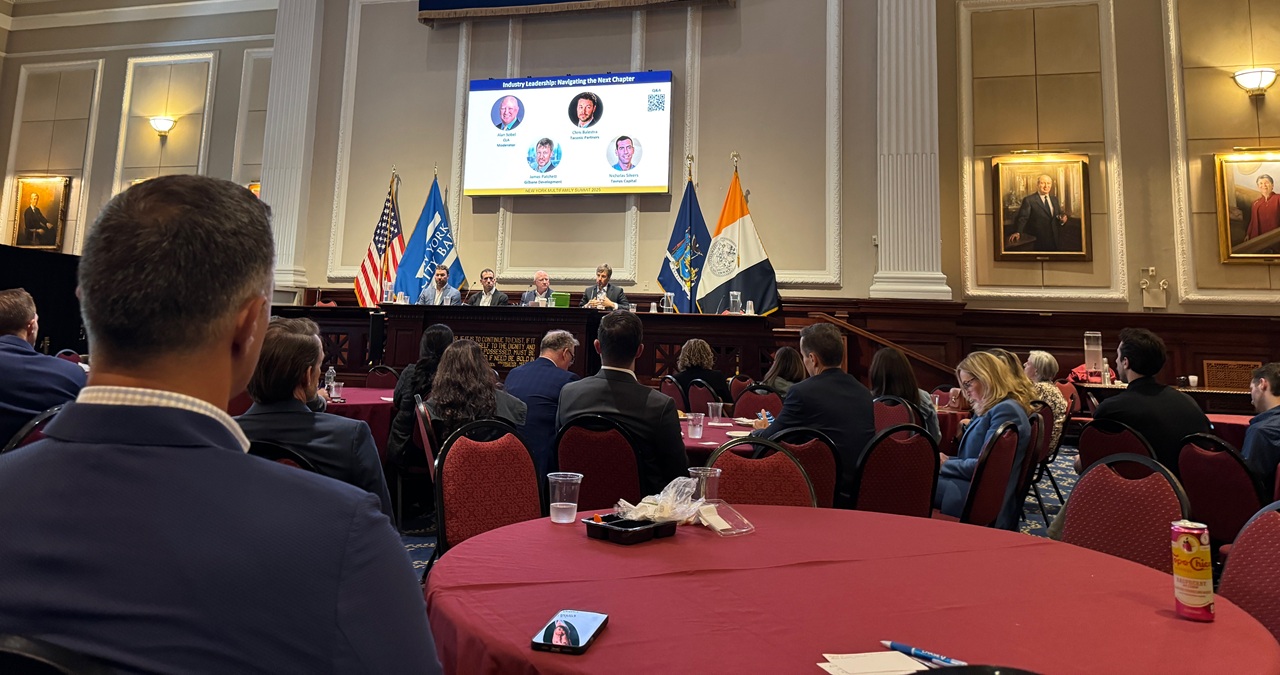
Another theme was operational centralization. First Service Residential reported using AI-powered variance notes for its portfolio. Smaller operators relied on outsourced accounting to access enterprise-grade reporting:
“Smaller operators are leveraging outsourced centralization to compete with larger firms, with outsourced accounting providing enterprise-level reporting for owners with as few as 10 properties.” — Panelist, GreenPearl NYC Multifamily Summit
The message: centralization and AI-driven reporting free teams to focus on growth, not repetitive admin work. The portfolio reporting cycle that used to run 5–7 business days at institutional scale now compresses to under 24 hours on platforms with embedded AI.
How Smart Capital Center fits: Automated reconciliation of rent rolls, financials, and servicing data delivers efficiency gains for both institutional investors and smaller operators. By standardizing inputs across the portfolio — not just within a single asset — the platform creates space for firms to focus on strategy and capital deployment, not spreadsheet maintenance. The same intelligence layer powering KeyBank’s 40% reduction in financial model prep time is available to operators with 10 properties as well as those with 10,000.
The clearest takeaway from the Summit: AI is no longer optional in multifamily.
“95% of on-site team member time is consumed by administrative tasks, limiting resident interaction opportunities — AI is being trained as a ‘new team member’ to change that.” — Panelist, GreenPearl NYC Multifamily Summit
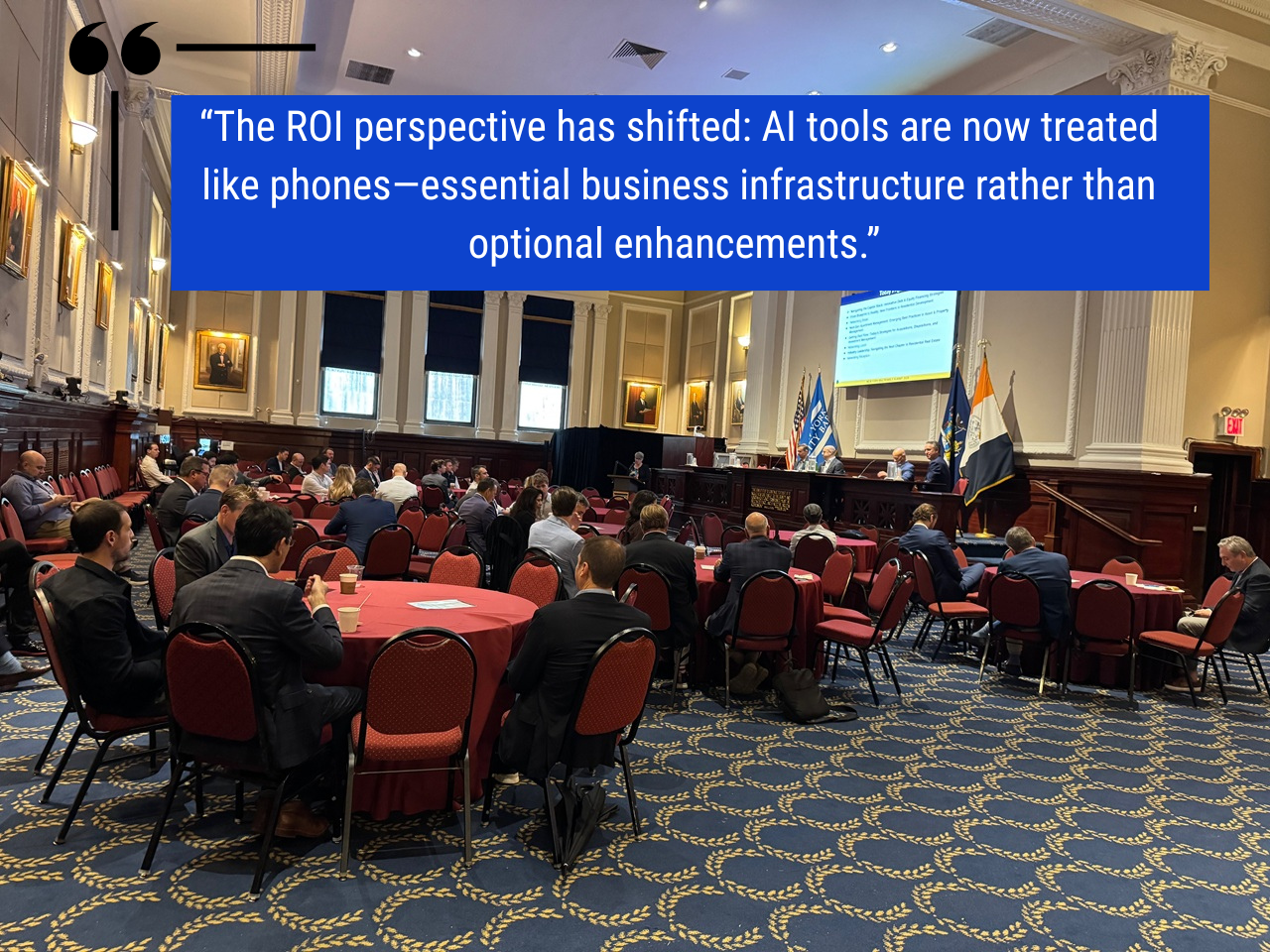
“The ROI perspective has shifted: AI tools are now treated like phones — essential business infrastructure rather than optional enhancements.” — Panelist, GreenPearl NYC Multifamily Summit
“AI fluency is becoming a requirement for all team members to boost operational efficiency.” — Panelist, GreenPearl NYC Multifamily Summit
How Smart Capital Center fits: This is why the platform exists. The objective is to make AI as foundational to CRE workflows as email or Excel once became. By embedding AI across underwriting, monitoring, portfolio insight, and debt management — with audit-grade source linking on every output — the platform moves firms beyond pilots and into enterprise adoption. Per the JLL Global Real Estate Technology Survey, 85% of real estate organizations still struggle to generate accurate, real-time information. Smart Capital Center is the infrastructure that closes that gap.
How Smart Capital Center fits: This view is why our platform exists. We want to make AI as important to CRE as email or Excel once were. By embedding AI across underwriting, monitoring, portfolio insight and debt management, we move firms beyond pilots to enterprise adoption.
Traditional CRE workflows often leave teams reacting to issues after they’ve already impacted performance. Smart Capital Center shifts this dynamic by equipping investors, lenders, and asset managers with tools that identify risks, surface insights, and run scenarios in real time—so decisions can be made before problems escalate.
Six proactive capabilities Smart Capital Center delivers on day one:
• Real-time data intelligence. Continuous monitoring of financials, rent rolls, market shifts, and tenant credit events — no material change goes unnoticed.
• AI-powered projections. Scenario modeling lets teams instantly test assumptions on rent growth, occupancy, or expenses and see immediate impact on NOI, DSCR, and IRR.
• Automated risk alerts. The platform proactively flags anomalies, tenant distress, lease rollover exposure, and market volatility before they become committee-level problems.
• 24/7 AI analysts. Always-on AI copilots and agents review data, reconcile documents, and surface insights around the clock — multiplying analyst capacity without adding headcount.
• Deep Research integration. Market news, regulatory updates, and tenant developments are continuously scanned and tied directly back to assets and portfolios, surfacing risks and opportunities manual workflows miss.
• Source-linked transparency. Every projection and alert links to its original document or benchmark — giving leadership the confidence to act decisively.
The result: investment teams gain time, foresight, and confidence. Instead of reacting to lagging reports, they anticipate challenges, seize opportunities earlier, and protect returns with proactive intelligence.
Walking away from the Multifamily Summit, it's clear that using AI in investing is important. Those who embrace AI will be the winners in the future.
Smart Capital Center enables this shift by helping:
In a sector where uncertainty is constant, Smart Capital Center provides confidence.
The Multifamily Summit made it clear: the industry’s future lies in AI-powered smart capital. And that is the future we are building.
How is AI being used in multifamily investing today?
AI is in production across four primary multifamily workloads: (1) underwriting and financial-statement processing (30x productivity gain reported by JLL); (2) leasing and lead management, with platforms now handling 10+ million leads annually and 41% of inquiries arriving during closed office hours; (3) fraud detection, where 6.4% of rental applications were fraudulent in 2024 per Snappt’s analysis of nearly 5 million documents; and (4) asset management, with continuous monitoring of rent rolls, tenant credit, and covenant compliance. Per Deloitte’s 2025 outlook, financial planning and analysis is the #1 priority workload (43%) for CRE firms with AI fully in production.
What is the timeline difference between office-to-residential conversion and ground-up multifamily development in NYC?
Per panelists at the GreenPearl NYC Multifamily Summit, office-to-residential conversions can typically be completed in approximately 16 months, compared with 36 months for ground-up multifamily development. The shorter timeline matters in the current rate environment, and the 467-m tax incentive enacted in 2024 extends up to 35 years of property tax relief for projects that include affordable housing. NYC conversion activity has scaled from 1.6 million square feet in 2023 to 4.1 million square feet underway through August 2025, with another 8.8 million square feet in the pipeline. The largest active project is 5 Times Square, which will create up to 1,250 housing units.
How significant is rental application fraud in multifamily, and can AI detect it?
Significant, and yes. Per Snappt’s 2024 Fraud Report, 6.4% of multifamily rental applications contained fraudulent or manipulated information in 2024 — over 80,000 forged documents in a single year. A National Multifamily Housing Council survey found 93.3% of multifamily operators reported fraud experience in the prior 12 months. AI-driven document review now flags up to 23% of initially approved applicants as unqualified at participating properties, with some NYC submarkets reporting 40–50% applicant fraud rates. The bad-debt avoidance from detection reached $156.7 million across the Snappt customer base in 2024.
Can Smart Capital Center integrate with my existing multifamily tech stack?
Yes. Smart Capital Center integrates directly with ARGUS Enterprise, Yardi, Midland Enterprise, SS&C Precision, Microsoft Excel, and any system via API. Existing models, templates, and chart-of-accounts mappings are preserved — the platform layers on top of the current stack rather than replacing it. Data flows in both directions, so analysts export AI-generated outputs back into their preferred reporting templates without disruption.
Will AI replace multifamily underwriters, asset managers, or operations staff?
No. AI removes the data-entry, reconciliation, and first-draft modeling layers that consume most analyst and operations time, but humans still own interpretation, exception handling, and committee-grade judgment. Per McKinsey’s 2025 analysis on agentic AI in real estate, the most successful deployments separate “steps” (repeatable tasks suited to AI execution) from “thoughts” (judgment calls that preserve human discretion). Teams using Smart Capital Center reallocate analyst capacity to deeper deal screening, portfolio strategy, and resident interaction — not headcount reduction. Summit panelists noted that 95% of on-site team member time is currently consumed by administrative tasks; AI is what frees that time for higher-value work.
How fast can a multifamily firm see ROI from AI adoption?
Faster than most firms expect. Smart Capital Center clients have reported measurable benefits within the first reporting cycle: JLL achieved 30x faster financial-statement processing (30–40 minutes per statement compressed to 1–3 minutes); KeyBank reached 40% reduction in financial model prep time on its CRE lending workflow; RMR Group compressed underwriting cycles meaningfully enough to redirect analyst capacity from manual reconciliation to portfolio strategy. The platform is in production at institutional investors, REITs, debt funds, regional banks, and CMBS-active firms.
Is multifamily AI adoption different from other CRE asset classes?
Multifamily has three structural characteristics that accelerate AI value: (1) high transaction volume per asset (lease signings, renewals, payments) generates rich training data; (2) standardized lease and rent-roll formats simplify automation; and (3) heavy administrative overhead in operations means AI-driven workflow compression frees significant capacity. Office and industrial assets share some of these traits but typically have fewer concurrent workflows. Retail and hospitality are more variable. The result: multifamily is the fastest-moving asset class in CRE AI adoption today, and the GreenPearl Summit confirmed it.
Get started with Smart Capital Center: Book a demo today to see how AI-powered multifamily underwriting, asset management, and portfolio surveillance apply to your portfolio.