


CRE Investors

July 30, 2026
CRE Investors
July 30, 2026
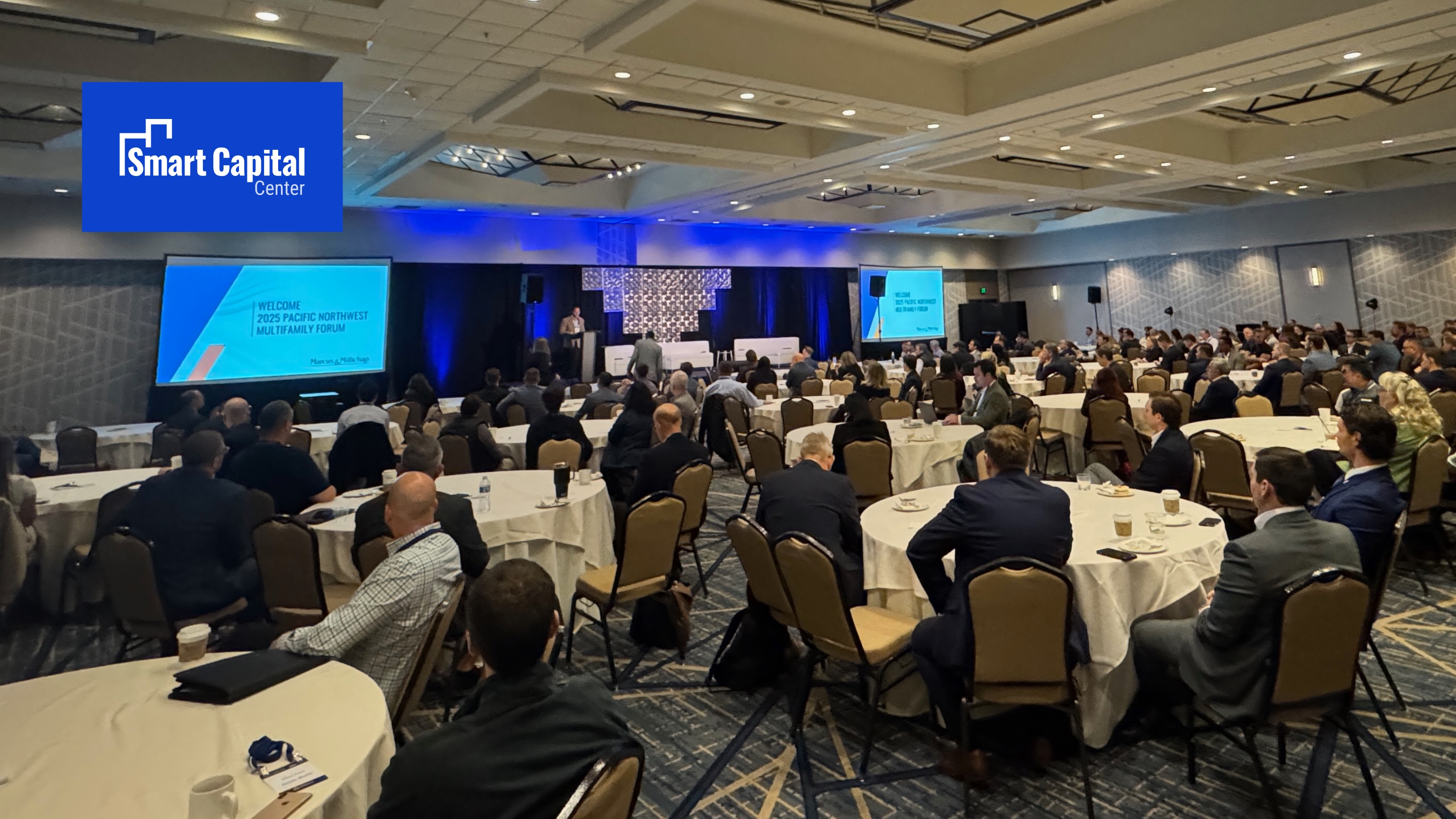
According to Marcus & Millichap research presented at the IPA Multifamily Forum: Pacific Northwest 2025, national multifamily transaction volume is now trending above 2021 levels — and Portland's transaction velocity is down only 6% from the 2014–2019 average, while Seattle–Tacoma is down just 14%. From the outside, headlines about the Pacific Northwest sound dramatic: war-zone metaphors, policy anxiety, tech layoffs. Investors keep asking the same question: Is the Pacific Northwest still worth leaning into, or is it time to rotate out?
The data from the room tells a different story than the data in the headlines. Across the market overview, capital markets, operations, and market leaders panels, local owners, developers, lenders, and operators agreed: Portland and Seattle are in a messy but attractive reset, fundamentals are healthier than the noise suggests, supply is set to tighten, and investors who understand the policies and submarkets are being paid for that homework.
This analysis draws on Smart Capital Center — a CRE intelligence platform analyzing $500B+ in transactions across 120M+ properties, used by KeyBank, JLL, and The RMR Group — to translate the IPA Forum panels into specific actions investors, lenders, and asset managers can take on PNW multifamily right now.
The 2025 IPA Multifamily Forum framed the Pacific Northwest as a "reset market." That phrase has a specific meaning, and it is worth defining precisely before underwriting a single deal.
A multifamily reset market is a market where four conditions hold at the same time:
The PNW is not in distress. It is in a selective buy window for patient, policy-fluent capital. The signal is not "buy everything" — it is "buy the right basis, in the right submarket, with the right operator."
The implication is direct: investors who underwrite PNW multifamily on national averages will misprice both Portland and Seattle. The advantage in 2026 belongs to underwriting that operates submarket by submarket and policy environment by policy environment.

Marcus & Millichap's John Chang opened the IPA Forum with a macro view that struck a chord with the room: despite constant noise, 2025 into 2026 could be one of the best multifamily buying windows in years.
He walked through the underlying data:
On the tax side, Chang highlighted bonus depreciation and cost segregation as underappreciated levers in today's environment. With the right structuring, acquisitions penciled in 2026 can deliver materially stronger after-tax returns than similar deals just a few years ago.
His overarching message: yes, policy risk and rate volatility are real. But investors who stay focused on jobs, supply, and structure — instead of headlines — may look back on 2025–2026 as a rare entry point.

No city has taken more heat in the national media than Portland. That is exactly why Joel Dice handed the mic to David Tabata, Marcus & Millichap’s Portland regional manager, to reset the narrative.
Tabata openly acknowledged the city’s challenges since 2020, from political friction to downtown distress. But as someone “born and raised in Portland” and raising a young family there, he argued that the war-zone image is badly overblown.
He walked through several tangible wins that are easy to miss:
He did not sugarcoat Multnomah County’s policy and perception problems, but he reframed them as exactly why this may be the moment to enter or re-enter the market:
Portland has “certainly had its challenges” since 2020, but pricing is now “a little bit suppressed” and long-term, he is still betting on the city.
For investors and lenders, the implication is straightforward:
Seattle's story is different but complementary. Tech headlines have focused on layoffs and rightsizing, yet Chang described Seattle as "tremendously resilient" — with a deep talent pool that continues to attract employers.
Several data points from the IPA panels stood out:
One panelist summed up the strategic focus as the intersection of jobs and interest rates. If the local labor market holds and rate pressure eases even modestly — consistent with Federal Reserve forward guidance — the combination of strong demand and falling new supply could produce a more landlord-friendly P&L in the next cycle.
From the underwriting lens at Smart Capital Center, that aligns with what we see on live PNW deals:
One of the most candid conversations came from the market leaders panel, where speakers compared policy environments across Oregon, Washington and neighboring states.
Key takeaways:
Chang framed West Coast tenant protections as a double edged sword. Some investors refuse to touch the region, choosing instead to chase yield in Texas or Florida. That crowds the buyer pool in those states and pushes cap rates lower. Local investors who understand “the rules of the road” in Portland and Seattle can often buy at more attractive yields and operate profitably within those constraints.
For institutional and non-institutional capital alike, that reinforces a familiar theme:
The apartment operations panel pivoted from capital markets to day-to-day management with a deliberate framing: Does multifamily have a technology problem, or a workforce opportunity?
Panelists agreed on the workforce reality:
On AI, one operator captured the room's mood: a "big proponent of AI" who fully expects it to change multifamily, but warned that we are still in a "messy middle" where one-off tools can create more fragmentation than value if they are not integrated around NOI.
The consensus was clear:
This mirrors how Smart Capital Center deploys AI in CRE. The most effective implementations are not chatbots in isolation; they are embedded in underwriting, portfolio monitoring, and exception reporting — so teams can see risk and opportunity across their assets and respond quickly. Ken Schroeder of KeyBank reported a 40% reduction in financial model preparation time after embedding this workflow; Fernando Salazar at JLL reported a 30x productivity gain on portfolio-level analysis.
The IPA capital markets panel brought together a structured finance leader, a life-company lender, an institutional owner, and a regional developer with deep PNW exposure. A few themes matter for anyone modeling a deal in the region.
Fannie and Freddie pricing on stabilized assets is generally in the high-5% range, while development financing comes in noticeably higher. In that context, creative structures and patient equity have become critical to getting new projects off the ground.
Many developers are shifting volume into affordable and senior housing, where demographic tailwinds and policy support are stronger, even as conventional market-rate deals struggle to pencil. One firm reported roughly 2,000 affordable units in pipeline in Washington alone, with ambitions to expand into California and other markets.
Despite the noise, capital still sees Seattle as "exceptionally important" and remains eager to place money in the region when the story, basis, and partner line up.
For investors, that reinforces what we see in live transactions on the Smart Capital platform: equity is discriminating, not disappearing. Deals that are realistic on land basis, construction costs, and lease-up assumptions — and that price in policy risk thoughtfully — still find both debt and equity.
Pulling all of this together, here is how we would translate the conference conversations into actionable themes for anyone with exposure to Portland and Seattle multifamily:
For investors with an appetite for near-term operational and political friction, 2025–2026 is shaping up as one of the more attractive Portland multifamily entry points in a decade. According to Marcus & Millichap's IPA Forum 2025 data, Portland transaction velocity is only ~6% below its 2014–2019 average — meaning the market is functioning, not frozen — while pricing is "a little bit suppressed" per Marcus & Millichap regional manager David Tabata. Long-term capital is voting with billions: $2B in OHSU healthcare investment, a $2.1B airport renovation, and a 1,200-unit redevelopment of the former Portland Public Schools site are all underway.
Both Oregon and Washington now have forms of rent control, but the immediate impact on existing portfolios is more muted than headlines suggest — many affordable and LIHTC deals are already governed by regulatory agreements. The bigger concern is the direction of travel, particularly in Washington, where IPA Forum 2025 panelists expect material policy expansion "within the next three to four years." For investors, this means modeling rent control as an underwritten variable across a multi-year hold — and recognizing that policy risk creates a competitive moat for local operators who already know the rules.
Seattle building permits are down approximately 66% year-over-year, per IPA Forum 2025 panelist data, following a peak delivery wave that is now being absorbed. This points to a tightening supply pipeline through the back half of the decade. Combined with what Marcus & Millichap's John Chang called Seattle's "tremendously resilient" talent pool and continued infrastructure investment, market leaders see 2026 as one of the stronger development windows in recent memory.
Multifamily cap rates in the PNW have moved up roughly 90 to 100 basis points from recent lows, per Marcus & Millichap data presented at the IPA Forum 2025. The driver is a combination of higher debt costs (Fannie and Freddie stabilized pricing is in the high-5% range), policy uncertainty pulling some out-of-state buyers toward Texas and Florida, and routine debt-maturity pressure on owners who acquired at peak pricing in 2021–2022. The result is more attractive entry yields for investors willing to underwrite the local environment carefully.
National multifamily transaction volume is trending above 2021 levels, and the PNW is participating in that recovery. Per Marcus & Millichap data presented at the IPA Forum 2025, Seattle–Tacoma transaction velocity is down only ~14% from the 2014–2019 average and Portland is down just ~6%. In both markets, deals are still pricing and closing — just on more rational timelines than the 2022 peak.
The pragmatic approach is to underwrite explicit additional friction in the near term — slower lease-up, more political and operational complexity — while recognizing that entry basis in 2025–2026 may compound favorably if downtown normalizes and policy stabilizes. Aligning with operators who understand Multnomah County ordinances and neighborhood-level dynamics is the single highest-impact decision an out-of-region investor can make on a Portland deal.
The Pacific Northwest is not the easy, low-friction growth story it was a decade ago. It is also not the doom loop national headlines suggest. Portland and Seattle in 2026 are markets where operational sophistication, data-driven underwriting, and policy fluency are real competitive advantages — and where the right basis, in the right submarket, with the right operator, is producing better risk-adjusted yields than chasing crowded Sun Belt cap rates.
For investors, lenders, and asset managers willing to do the homework, the next few years offer exactly what smart capital looks for: better entry basis, less crowded bidding pools, and assets located in regions that still have deep talent, sustained infrastructure investment, and long-term economic relevance.
Underwrite your next Portland or Seattle multifamily deal with the same intelligence used by KeyBank, JLL, and The RMR Group. Book a demo today.