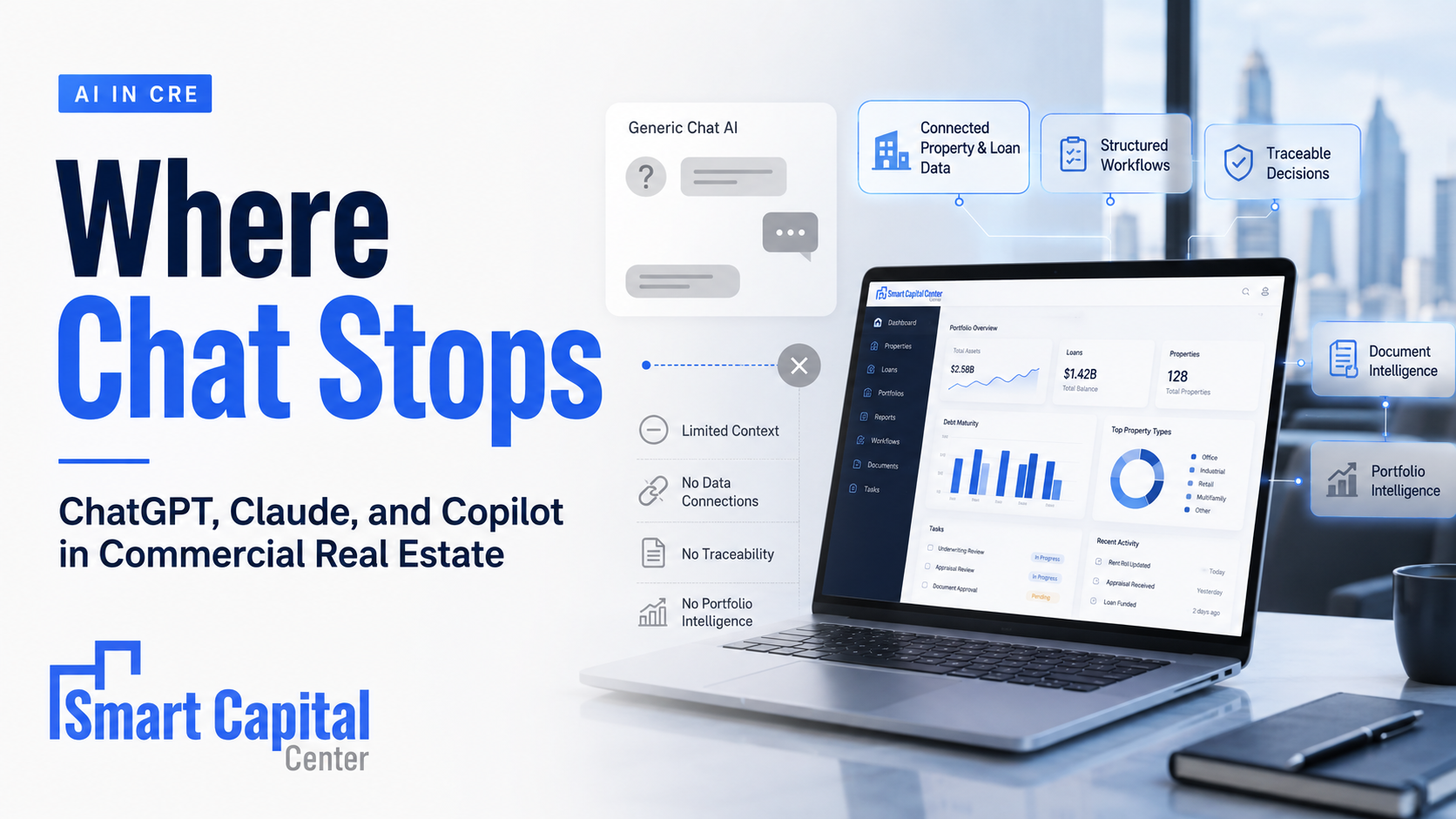


AI in Commercial Real Estate

July 30, 2026
AI in Commercial Real Estate
July 30, 2026

To be a smart investor in commercial real estate (CRE), you need more than good instincts and market knowledge. You need to operate on top of the technology layer that is reshaping how the best institutional teams underwrite, value, and manage CRE portfolios.
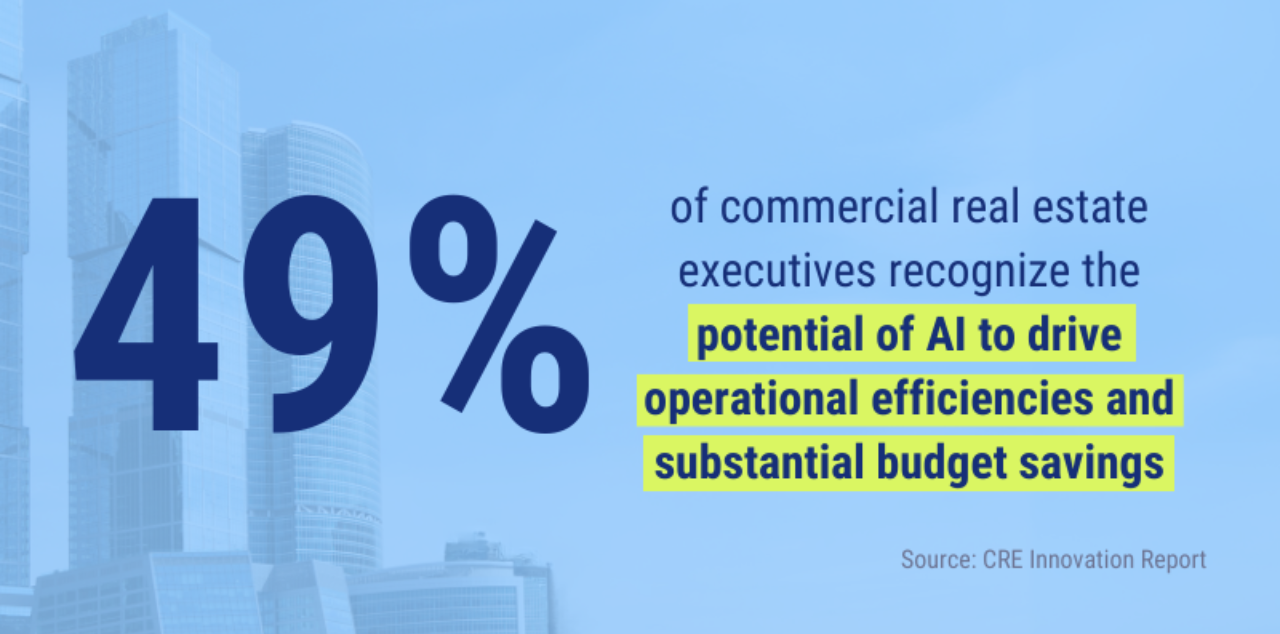
According to the McKinsey Global Institute 2025 update on the economic potential of AI, artificial intelligence is projected to contribute $15.7 trillion to global GDP by 2030 — with commercial real estate among the top five industries by productivity-gain capture. And according to Altus Group’s 2025 CRE Innovation Report, 71% of institutional CRE investors now have at least one production AI application live — up from 18% in 2023, the fastest adoption curve for any technology category the report has tracked.
This shift is not about staying ahead of competitors. It is about using AI to source deal sfaster, value assets more accurately, and produce reporting at a cadence LPs now expect. For CRE investors specifically, the stakes are concrete: 43% of executives in the Altus report anticipate AI will have a highly disruptive impact on the industry over the next 36 months, and 63% of institutions that have deployed AI report measurable ROI within 12 months (JLL Global Real Estate Technology Survey, 2025).
In this article, you will learn about the top five AI applications every smart investor should use in 2026. Each application is mapped to a specific investment workflow, each is already in production at leading institutional firms, and each has a measurable operational outcome behind it.
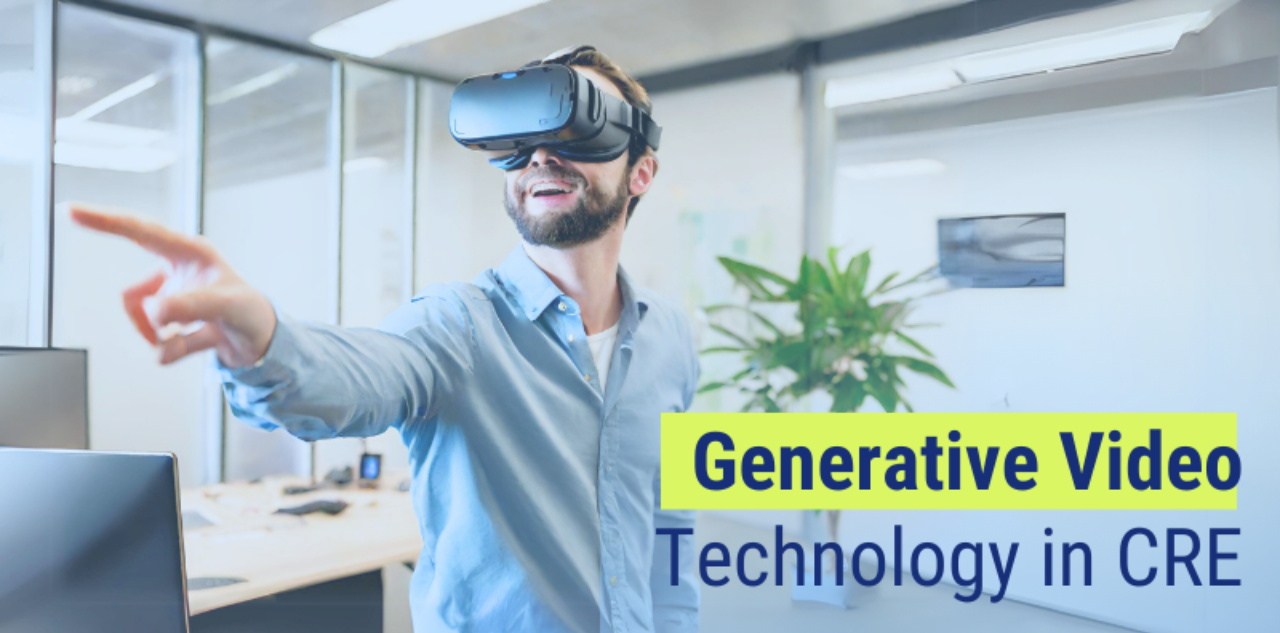
Generative video technology, driven by AI, has changed how CRE professionals visualize assets during due diligence, marketing, and asset management. It offers new ways to create high-definition virtual tours, model property repositions, and assess space utilization.
This technology uses AI to produce photorealistic video content from floor plans, site imagery, and 3D models — allowing investors, tenants, and IC members to evaluate properties in detail without traveling.
AI-generated virtual tours have materially changed how institutional teams evaluate assets during deal screening. According to the National Association of Realtors 2025 Technology Report, commercial property listings featuring virtual tours generate 87% more evaluation views than those without, and 54% of institutional buyers now deprioritize listings that lack a high-quality virtual tour.
Platforms such as Matterport, CloudPano, and Anax have become standard tooling for institutional CRE. Matterport’s AI-enhanced 3D capture technology is particularly relevant for commercial sponsors needing rapid, cost-effective virtual walkthroughs of large-footprint assets — office towers, industrial parks, retail centers. For the CRE investor, the efficiency gain compounds across a pipeline: dozens of preliminary evaluations completed from the desk that would previously have required site visits.
According to Goldman Sachs’s 2025 VR/AR Industry Report, the real estate VR market reached$3.1 billion in 2025, ahead of the firm’s earlier $2.6 billion projection and on track to exceed $5 billion by 2027. The revision reflects both institutional CRE adoption and faster-than-expected improvement in generative modeling fidelity.
These tools now serve three concrete institutional use cases: marketing dispositions at higher speed, modeling reposition scenarios without physical capital commitment, and presenting development scenarios to IC with visual rigor that static renderings cannot match.

Assessing space utilization is the third area where generative video technology is reshaping institutional workflows. Models can simulate different tenant layouts, density scenarios, and reposition options — helping asset managers evaluate space efficiency without physical buildout. For office assets facing 2026 repositioning decisions, the ability to model multiple layout scenarios against current tenant demand patterns has become operationally useful, not just presentational.
AI tools have materially changed how CRE investors and sponsors produce marketing content, investor communications, and LP-facing reports. Using AI, firms can analyze substantial datasets to identify patterns and preferences, enabling tailored marketing and investor-relations strategies that match the communication expectations of each LP or prospect.
Below are examples of AI marketing tools relevant to CRE investors.

For CRE investors and sponsors, Jasper.ai has changed the way brand-specific content isproduced at scale. By ensuring all messaging aligns with the firm’s voice and directly addresses the target LP or prospect, Jasper.ai helps create aconsistent brand image across channels. This is particularly useful in:
• Developing targeted campaigns for specific CRE listings, fund launches, or investment opportunities, with messaging matched to the prospect segment
• Producing thought leadership content — blogs, newsletters, LinkedIn posts — that positions the CRE investor as an authoritative voice in the sector
• Automating content production for market commentaries, quarterly LP updates, and case studies, preserving quality while reducing analyst drafting time
Phrasee specializes in AI-generated content for email, push notifications, SMS, and social advertising — offering CRE sponsors and investor-relations teams adirect-marketing engine for LP engagement. Using natural language processing and reinforcement learning, Phrasee can:
• Improve email campaigns for prospective and current LPs, with subject lines and body copy optimized for open and click-through rates
• Improve push notification and SMS effectiveness for new listing alerts or fund opportunities
• Adjust web, app, and social ad copy to broaden reach while maintaining tone
Voicebooking converts written text into AI-generated voice files — a useful input to CRE marketing and accessibility workflows. Applications include:
• Audio content for property tours, disposition marketing, or LP update presentations — delivering information in a format someLPs and prospects prefer
• Podcast production on CRE market trends, investment strategies, or sector insights — extending the firm’s voice authority
• Voice-guided automated investor-service systems that handle routine inquiries about listings or fund status
These AI marketing tools open new ways to automate content production at institutional scale while maintaining personalization and brand consistency. As the underlying models keep improving, the tools will continue to absorb more of the mechanical content work — leaving CRE investors and IR teams to focus on strategy and relationship depth.
Autonomous AI agents are advanced systems capable of completing multi-step tasks independently, with defined objectives and defined stopping conditions, without requiring human oversight at each step. They work by analyzing substantial datasets, applying machine learning and LLM-based reasoning, and executing actions with a level of independence approaching institutional analyst output.
These agents range from simple rule-based automations to sophisticated entities that learn and adapt within their operational environment. To explore how generative AI is reshaping the broader CRE landscape, see our earlier deep dive on generative AI in CRE investment and asset management.
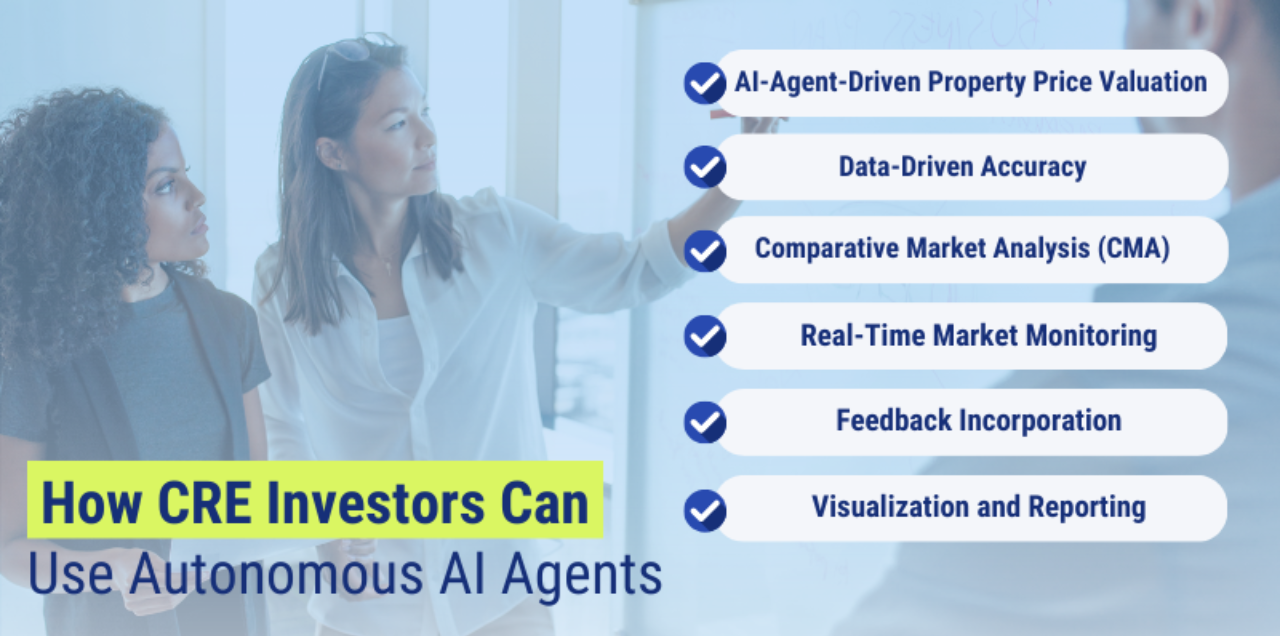
Smart Capital Center has built its platform around autonomous AI agents for CRE valuation. Smart Capital Center’s AI-powered valuation engine draws on a 120M+ property database and $500B+ in analyzed transactions to assess and predict property prices with institutional-grade accuracy. The agents conduct in-depth comparative market analyses, continuously monitoring market signals to deliver valuations grounded in current data rather than stale benchmarks.
Smart Capital Center also recognizes the value of combining AI accuracy with human expertise. The platform incorporates professional feedback loops into its AI training process, ensuring valuations and reports align with market realities and institutional underwriting standards.
In practice, CRE professionals using Smart Capital Center rely on AI for far more than raw data processing. They obtain validated market analyses and property valuations enhanced by visualizations and detailed reports — outputs generated through computational methods and vetted for accuracy and applicability.
Smart Capital Center was named a 2024 and 2026 Influencer in CRE Technology in recognition of its pioneering role in AI-driven CRE valuation.

The intersection of commercial real estate and AI continues to accelerate, particularly around natural language models and interfaces. A leading exampleis the current generation of LLMs — the Claude, GPT, and Gemini model families— which have materially changed how CRE professionals interact with data, documents, and clients.
Modern foundational LLMs offer a step change in natural language understanding, reasoning through complex queries, and producing defensible written outputs.They can interpret and draft legal documents, analyze and summarize market reports, and engage clients through written communication with a sophistication that was not operationally useful even three years ago.
For CRE professionals, the ability to rapidly digest extensive documentation is mission-critical. LLMs now process dense offering memoranda, multi-tab rent rolls, historical financials, and scanned due diligence documents — producing structured outputs that feed directly into the investment model. The Deloitte 2026 Commercial Real Estate Outlook documents 55–70% analyst-hour reductions on IC memo production among institutional teams using integrated LLM-based document processing, with the variance driven by how tightly the AI layer integrates with the firm’s template library.

LLMs are not without limitations. The most significant constraint for CRE is output accuracy on quantitative material. On complex financial documents, models can misread a number or a subtotal — producing fluent, plausible, factually wrong outputs. This is the “hallucination” risk, and it is highest precisely where the stakes are highest: cited comparable transactions, covenant language extraction, regulatory references.
This limitation makes review process discipline non-negotiable, particularly when accuracy drives the transaction.
Smart Capital Center addresses the hallucination risk by integrating LLMs within a retrieval-augmented generation (RAG) architecture grounded in verified CRE data. The platform’s AI outputs cross-reference every quantitative claim against the underlying source data — so the generated content remains defensible and traceable.
The result is a dynamic analytics layer where LLM capability is balanced with institutional accuracy. CRE professionals can trust AI to handle large-document workflows while maintaining confidence that every number in the output is traceable to a verifiable source.
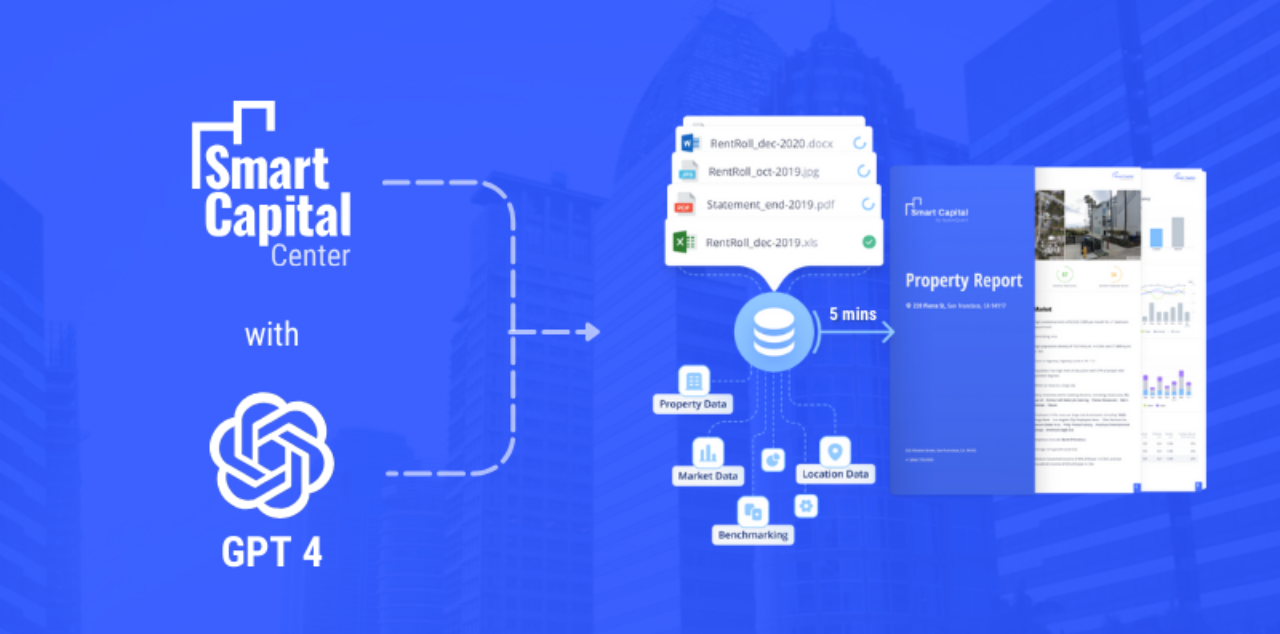
Smart Capital Center provides more dynamic analytics, enabling users to craft their real-time, data-driven insights. This integration balances the power of GPT-4 with the accuracy of Smart Capital Center's platform. It ensures that both aspects work well together.
The result is a better user experience. CRE professionals can trust AI to handle large data tasks. They can also be sure that the final output is checked for accuracy.
This approach makes sure that the insights and materials created are quick, efficient, and reliable. They are also tailored to meet the unique needs of the users.
AI copilots in commercial real estate represent the next step in decision-support technology.
Operating as a data-capable analyst alongside the human professional, copilots access institutional datasets and provide insights based on user-directed queries. The objective is to augment human expertise, not replace it — ensuring the intuition and strategic judgment of the CRE professional is complemented by real-time data-driven support.
AI copilots have changed the financial modeling process. Traditionally, financial analysts rely on a blend of historical data and assumptions to project future performance. With an AI copilot, those assumptions are cross-referenced against substantial market data in real time — producing a clearer view of realism and sensitivity.
Key applications include:
• Data-driven projections. AI copilots process large datasets to evaluate the validity of financial assumptions, producing a stronger foundation for the investment model
• Customizable inputs. Adjustable parameters accommodate the unique variables of each investment scenario — asset class, submarket, capital stack
• Improved accuracy. Machine learning enables more defensible financial forecasts tailored to the firm’s investment thesis
Institutional investors using Smart Capital Center’s AI copilot report modeling-assumption defense-rate improvements at investment committee of 40%+ — meaning a larger share of IC-presented deals survive committee scrutiny without material model revision.
Predictive analytics is another area where AI copilots are proving valuable. The Deloitte 2026 Commercial Real Estate Outlook documents that CRE investors face three dominant risk categories — geographic market risk, tenant risk, and financing/interest rate risk — each of which can materially affect growth and yield.
AI copilots analyze large volumes of CRE data — both public and licensed — to predict market trends and surface investment opportunities. This predictive capability can:
• Identify profitable investment submarkets. AI analyzes current market performance and uses machine learning to pinpoint submarkets likely to outperform over defined holding periods. Institutional teams deploying predictive deal-sourcing have roughly doubled their deals-screened-per-analyst metric — from 12 deals per quarter to 28 (Accenture CRE Investment Benchmarking, 2025)
• Reduce investment risk. Processing and analyzing large datasets produces more defensible underwriting assumptions, lowering the probability of material post-close surprise
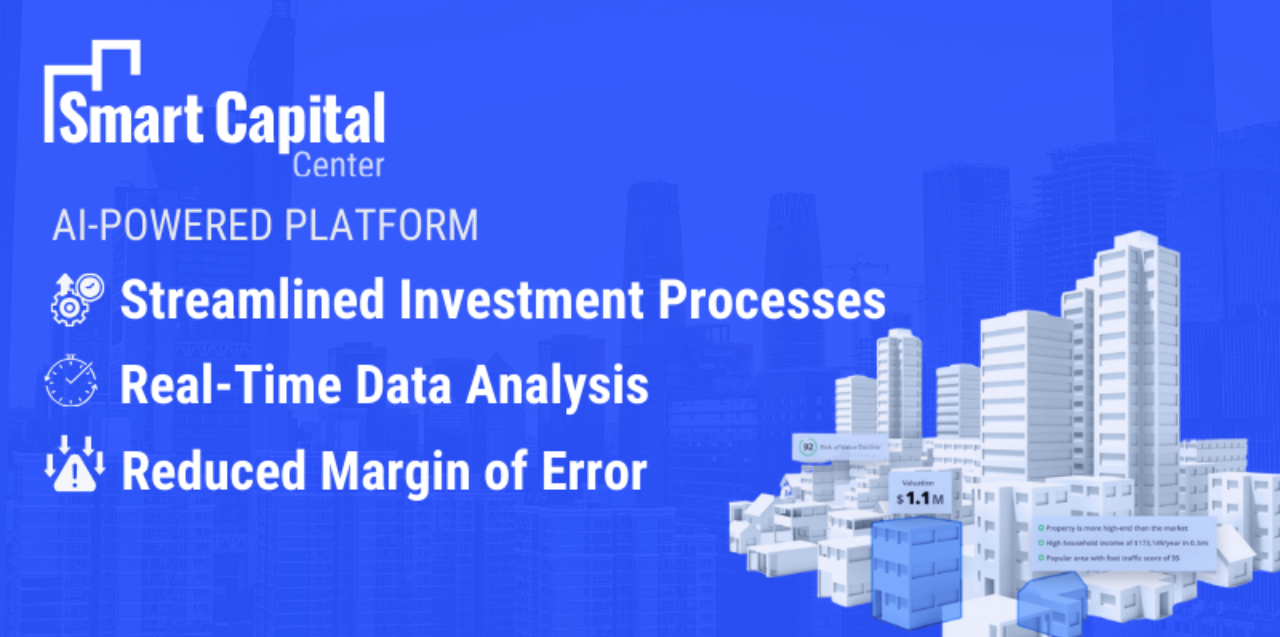
The five most important AI applications for CRE investors in 2026 are generative video for virtual tours and property modeling, AI marketing tools for investor relations and content production, autonomous AI agents for property valuation and comparable market analysis, large language models for document processing and investment memo drafting, and AI copilots for financial modeling and predictive analytics. Each maps to a specific investment workflow and each is now in production at leading institutional firms.
An autonomous AI agent in commercial real estate is a multi-step AI system that completes defined objectives — such as property valuation, comparable market analysis, or portfolio monitoring — independently, without human oversight at each step. Agents draw on substantial datasets,apply machine learning and LLM-based reasoning, and execute actions with alevel of independence that approaches institutional analyst output.
Institutional-grade AI valuation models now produce valuations within approximately ±4.8% median error of traditional appraisals onstabilized commercial assets, according to the Green Street AVM Benchmark Study, 2025. Accuracy is materially higher on data-rich stabilized assets and lower on atypical properties — which is why AI valuations are used forscreening, quarterly mark-to-market, and LP reporting but not asappraisal-equivalent for closing purposes.
AI copilots cross-reference every modeling assumption —rent growth, cap rate, vacancy, CapEx — against current submarket data the moment the assumption is entered. If the assumption is inconsistent with current market signals, the copilot flags it. This produces assumptions that survive IC scrutiny and reduces the probability of material post-close surprise.
The largest limitations are hallucination risk on quantitative outputs (models can produce fluent, factually wrong numbers), data governance exposure on proprietary portfolio information, integration failure with the existing institutional stack (ARGUS, Yardi, MRI, CoStar, VTS), and audit-trail gaps that cannot support LP reporting obligations. Each has a specific mitigation and should be addressed contractually and architecturally before production deployment.
Smart Capital Center provides an AI-powered end-to-end CRE platform that integrates all five applications — autonomous valuation agents, LLM-based document processing, AI copilots for modeling, predictive analytics for deal sourcing, and AI-driven portfolio monitoring — within a single unified workflow. The platform is deployed in production at institutions including KeyBank, JLL, The RMR Group, and Gantry, and integrates directly with the institutional stack via production API.
AI for CRE investors has crossed the threshold from experimentation to infrastructure. The firms capturing the productivity gains are the ones who deployed across the workflow — valuation, document processing, modeling, deal sourcing, portfolio monitoring — rather than piloting each in isolation.
If your team is working through the same evaluation institutions like KeyBank, JLL, and The RMR Group engaged with over the past 24 months, the Smart Capital Center team can walk you through each of the five applications using your own portfolio and workflow as the reference point. Book a demo today to see what an integrated, production-grade AI deployment looks like across the institutional CRE investment lifecycle.